 EN
EN  BG
BG HR
HR CS
CS DA
DA NL
NL FI
FI FR
FR DE
DE IT
IT JA
JA KO
KO NO
NO PL
PL PT
PT RU
RU ES
ES SV
SV TL
TL SR
SR SK
SK UK
UK VI
VI TH
TH MS
MS BE
BE HY
HY
Introduction
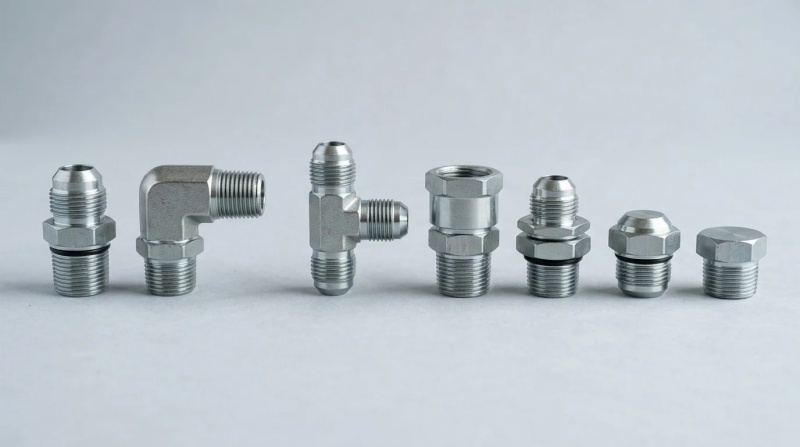
Hydraulic fittings differ far more than their shapes suggest. Thread form, sealing method, pressure rating, and governing standard all affect whether a system resists leaks, vibration, and pressure spikes in real service. This article explains the main hydraulic fitting types, how common standards such as JIC, ORFS, BSP, and NPT compare, and where each design is typically used. You’ll also see how seal choices influence reliability, maintenance, and interchangeability, helping you avoid mismatched connections that lead to downtime, contamination, or safety risks. With that foundation, the body breaks down the key fitting categories and the practical selection factors behind them.
Why Hydraulic Fitting Types Matter?
Dismissing hydraulic fitting types as mere plumbing commodities is a critical error in fluid power system design. The integrity of an entire hydraulic circuit relies heavily on the specific interface between conductors. When designing systems that operate under high-stress conditions, selecting the correct fitting geometry and sealing method dictates whether a machine runs continuously or suffers from costly, hazardous fluid leaks.
A mismatched fitting does not simply cause a slow drip; it compromises system efficiency, introduces contamination, and creates severe safety hazards for operators. Therefore, understanding the nuanced differences between various hydraulic fitting architectures is foundational to robust mechanical design.
Reliability and Compliance Basics
Reliability in hydraulic networks begins with strict adherence to compliance basics. When evaluating a system subjected to dynamic loads, such as pressure spikes exceeding 6,000 psi (414 bar), non-compliant fittings are the first point of failure. Engineers rely on international standards like ISO 8434-1 for metallic tube connections to ensure dimensional consistency, burst pressure safety margins, and material traceability.
Failure to meet these baseline compliance metrics drastically increases the probability of catastrophic blowouts and environmental contamination, which can incur severe regulatory fines and extensive downtime. Furthermore, strict adherence to established standards ensures interoperability across different manufacturers, safeguarding supply chains against single-source dependencies.
Key Comparison Criteria
When evaluating fitting types, three key comparison criteria take priority: pressure rating, vibration resistance, and reusability. A fitting's ability to maintain a leak-free seal under severe shock loads is paramount. For instance, while some tapered threads may seal adequately in static applications, their reliability plummets in systems experiencing the high-frequency vibrations common in mobile equipment.
Furthermore, maintenance cycles must be considered. Fittings that undergo permanent mechanical deformation during their initial installation often require complete replacement upon disassembly. Conversely, elastomeric seal designs allow for multiple reassembly cycles with simple, low-cost O-ring replacements, significantly driving down long-term operational and maintenance costs over the equipment's lifespan.
Main Hydraulic Fitting Types and Standards
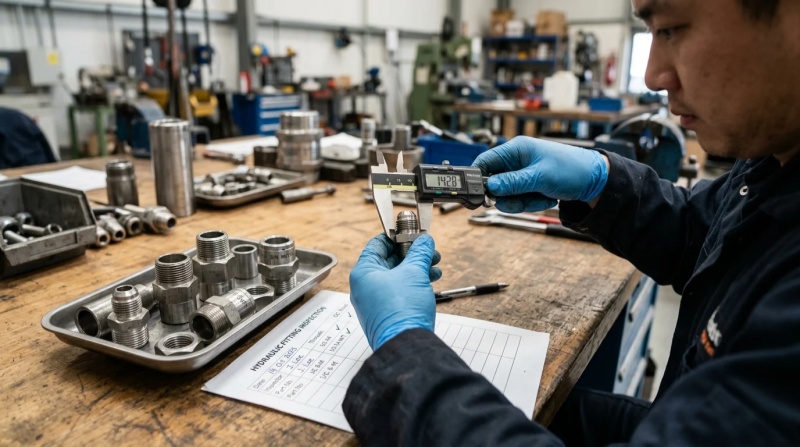
Navigating the landscape of hydraulic fitting types requires a firm grasp of the dominant regional and international standards. Depending on the origin of the equipment being serviced or designed, professionals frequently encounter a mix of North American, European, and Japanese specifications.
Understanding the geometric nuances of these standards is essential for achieving proper alignment and torque without galling the threads or compromising the structural integrity of the joint.
JIC, ORFS, NPT, BSP, SAE, and Metric Overview
The most prevalent standards encountered in the field include JIC (Joint Industry Council), ORFS (O-Ring Face Seal), NPT (National Pipe Tapered), BSP (British Standard Pipe), and Metric DIN standards. JIC fittings, governed by SAE J514, utilize a 37-degree flared seating surface, making them a global staple for medium-to-high pressure applications.
ORFS fittings (SAE J1453) feature a flat face with a captive O-ring, offering superior leak resistance in demanding environments. Older legacy systems often utilize NPT, which relies on thread deformation to seal, while European machinery heavily favors BSPP (parallel) and DIN 2353 metric fittings, which use a 24-degree bite-type mechanism for exceptional grip on heavy-wall tubing.
Seal Design Comparison
The sealing mechanism fundamentally dictates a fitting's performance envelope. The following comparative analysis of the primary seal designs specified in modern hydraulic circuits illustrates their operational limits and optimal use cases.
| Fitting Standard | Sealing Mechanism | Max Pressure (psi) | Vibration Resistance |
| JIC (SAE J514) | 37° Metal Flare | Up to 6,000 | Moderate |
| ORFS (SAE J1453) | Elastomeric O-Ring | Up to 9,000 | Excellent |
| NPT (ANSI B1.20) | Thread Deformation | Up to 3,000 | Poor |
| DIN 2353 (Metric) | 24° Bite Type | Up to 11,600 | High |
As the data indicates, metal-to-metal seals like the JIC flare are robust but vulnerable to micro-leaks under severe vibration due to metal fatigue. In contrast, elastomeric seals like those in ORFS fittings absorb microscopic flange movements, preventing fluid bypass even at 9,000 psi. Tapered threads, while historically common, are increasingly phased out of high-pressure modern designs due to their poor vibration tolerance and high risk of over-torquing.
How to Choose the Right Hydraulic Fitting Type?
Specifying the optimal hydraulic fitting type is an exercise in balancing performance requirements against environmental constraints and lifecycle costs. Designers cannot simply default to the most robust fitting available, as over-engineering incurs unnecessary bulk, weight, and expense.
Instead, a systematic approach is necessary to align the fitting's mechanical properties with the specific demands of the hydraulic circuit, ensuring both safety and economic efficiency.
Step-by-Step Selection Process
The STAMP acronym—Size, Temperature, Application, Media, and Pressure—serves as a highly effective baseline selection process. Temperature, for example, strictly limits sealing options; standard Nitrile (Buna-N) O-rings degrade rapidly outside their -40°C to +120°C operating window. If the fluid temperature exceeds this threshold, systems must transition to Viton (FKM) seals or revert to purely mechanical metal-to-metal flare fittings.
Media compatibility is another critical step; aggressive synthetic hydraulic fluids or phosphate esters will chemically attack standard elastomers, necessitating specialized seal materials. Proper sizing and pressure matching are equally critical; utilizing a fitting rated for 3,000 psi in a circuit that experiences 5,000 psi transient spikes guarantees premature failure. Assembly ergonomics must also be accounted for; specifying ORFS fittings can reduce required assembly torque by up to 20% compared to equivalent heavy-duty bite-type fittings, greatly reducing technician fatigue during installation.
Application-Based Decision Guidance
The final decision heavily relies on the application context. In mobile hydraulics, where space is heavily constrained and equipment is subjected to relentless mechanical shock loads, ORFS fittings are strongly favored for their compact flat-face design and unparalleled vibration immunity.
Conversely, for heavy industrial presses operating in relatively static environments with massive bore cylinders, DIN 24-degree bite-type fittings offer the necessary structural rigidity and ultra-high pressure ratings (frequently exceeding 800 bar).
Key Takeaways
· The most important conclusions and rationale for hydraulic fittings types
· Specs, compliance, and risk checks worth validating before you commit
· Practical next steps and caveats readers can apply immediately
Frequently Asked Questions
Which hydraulic fitting type is best for high-vibration equipment?
ORFS is usually the best choice because its O-ring face seal resists vibration-related leaks better than tapered threads and most metal-to-metal seals.
When should I use JIC fittings?
Use JIC for medium-to-high pressure systems needing a common, reusable 37° flare connection, especially where serviceability and broad availability matter.
Are NPT fittings suitable for modern high-pressure hydraulics?
Usually no. NPT relies on thread deformation, has poorer vibration resistance, and is more prone to over-torquing and leaks in demanding hydraulic service.
What standard is common on European hydraulic equipment?
BSPP and DIN 2353 metric fittings are common on European machines. Always verify thread type, seat angle, and tube size before replacement.
How do I avoid mixing incompatible hydraulic fitting types?
Check the standard, thread form, seal style, and seat angle first. Never force-fit similar-looking parts; confirm specs like JIC 37°, ORFS flat face, BSP, or metric DIN.
Founded in 2004, NingBo NJ Hydraulic Adapter Co., Ltd specializes in manufacturing hydraulic fittings, hydraulic adapters, hose fittings, split flange kits, flange adapters, flanges, reusable hose fittings, ferrules, caps and plugs and so on, then sell to worldwide, especially North America, South America, Australia, Germany, UK. Our history of collaboration with our customers for specially designed hydraulic applications, has established NJ as an industry-preferred source for customer-specific manufactured adapters. We are proud to serve major markets including: construction, agriculture, mining, industrial equipment and more. All NJ fittings are manufactured to the highest standards, meeting S.A.E./BRITISH/EATON/DIN and INTERNATIONAL specifications. We control our own manufacturing both domestically and overseas. NJ has a strong inventory reserve, more than 20,000 warehouse has more than 25,000 series and sizes of fittings, far more than the competitors twice as much. From the time we receive your order until it arrives at your facility, we're committed to meeting your deadlines and delivery requirements. Our goal is to provide your fittings as fast as possible — when and where you need them — which also helps you keep your inventories and freight costs low. Whether you have an emergency or an ongoing need, send us an email. We deliver the fittings you want, along with the high quality, best after-sales service and competitive price you deserve.