
 EN
EN  BG
BG HR
HR CS
CS DA
DA NL
NL FI
FI FR
FR DE
DE IT
IT JA
JA KO
KO NO
NO PL
PL PT
PT RU
RU ES
ES SV
SV TL
TL SR
SR SK
SK UK
UK VI
VI TH
TH MS
MS BE
BE HY
HY
Introduction
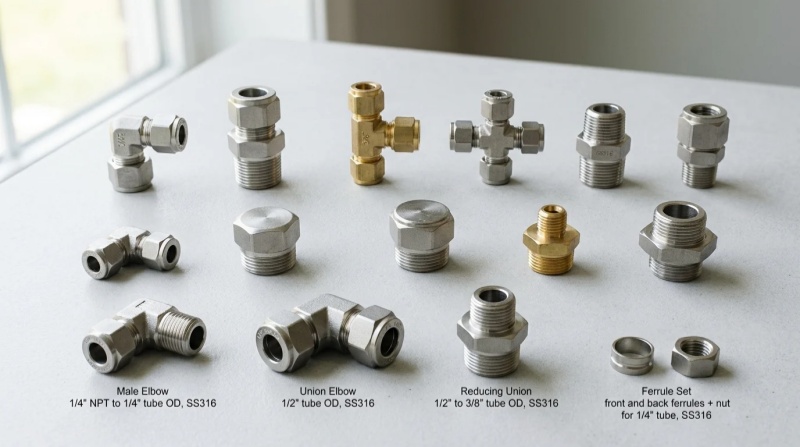
Choosing among tube fitting types is not just a matter of matching size; it affects leak tightness, maintenance effort, vibration resistance, material compatibility, and overall system reliability. Different designs serve different demands, from general utility lines to high-pressure, high-purity, or frequently serviced installations. This guide explains the main fitting types, how they differ in sealing method and application, and what to consider when selecting one for a specific service. By the end, you will have a practical framework for comparing options and avoiding common selection mistakes before they become performance, safety, or cost problems.
Why Tube Fitting Types Matter
In my years of designing and maintaining complex fluid conveyance systems, I have found that overlooking the specific types of tube fittings can lead to catastrophic system failures. We rely on these seemingly minor components to maintain system integrity under highly rigorous and often volatile conditions. Whether we are routing cooling water through a manufacturing plant or handling ultra-high-purity gases in a semiconductor cleanroom, the fitting is the critical bridge.
A compromised connection does not just cause a minor leak; it can halt an entire production line, trigger environmental compliance violations, or pose severe safety hazards to our personnel. Furthermore, the choice of fitting material directly impacts the longevity of the entire system, preventing galvanic corrosion and premature wear. Therefore, understanding the fundamental nature of these components is a non-negotiable requirement for any engineering or maintenance professional.
Defining Tube Fittings
A tube fitting is a specialized mechanical device utilized to connect sections of tubing together, or to securely attach tubing to inline fluid components such as valves, manifolds, and pumps. Unlike traditional pipe fittings—which are typically classified by nominal pipe size and varying wall schedules—we size tube fittings strictly by the exact outside diameter (OD) of the tube.
In our standard projects, the sizes I encounter range from minute 1/16-inch diameters used for delicate analytical instrumentation, all the way up to robust 2-inch OD lines designed for heavy hydraulic power units. Furthermore, the compatibility of a fitting is intrinsically tied to the tubing's wall thickness, ensuring the sealing mechanism can properly grip the metal or plastic without crushing it. We must also be vigilant regarding metric versus fractional imperial sizing; attempting to force a 6mm tube into a 1/4-inch (6.35mm) fitting is a frequent error that guarantees an immediate leak.
Key Comparison Criteria
When we evaluate and compare these fittings, several critical criteria dictate our engineering choices. Operating pressure is arguably the most paramount metric; while standard pneumatic push-to-connect fittings might safely max out at 150 PSI, specialized high-pressure hydraulic variants must routinely handle dynamic loads up to 10,000 PSI without yielding.
Temperature tolerance serves as another strict boundary. For instance, standard nitrile elastomer seals degrade and fail when exposed to continuous temperatures above 250°F (121°C), which necessitates our transition to metal-to-metal sealing architectures for extreme thermal environments. Additionally, we must evaluate vibration resistance; systems subjected to high-frequency mechanical oscillation require fittings that will not back off or loosen over thousands of operational hours.
Main Types of Tube Fittings
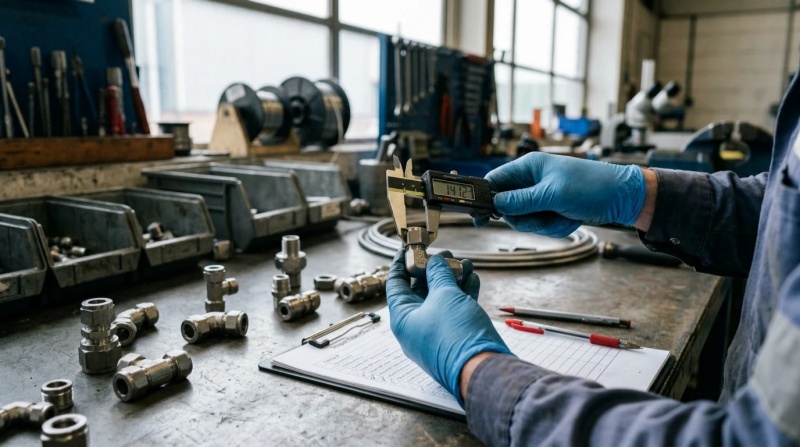
As we navigate the industrial marketplace, we quickly observe that four or five fundamental architectures dominate the fluid routing landscape. Understanding the distinct mechanical differences between these designs allows us to accurately match the hardware to our specific operational demands.
The evolution of these fittings has been driven by the need to solve specific engineering challenges, ranging from rapid assembly requirements on automated automotive lines to absolute zero-leakage mandates in deep-space aerospace applications.
Common Types Compared
To clarify this diverse landscape, I often categorize our options based on their primary sealing mechanism and installation requirements. The table below highlights these distinctions, drawing from standard baseline specifications across major manufacturers.
| Fitting Type | Typical Max Pressure (PSI) | Reusability | Average Unit Cost Band |
| Twin-Ferrule Compression | 6,000 - 10,000 | High | $15 - $50 |
| 37° Flare (JIC) | 3,000 - 5,000 | Moderate | $5 - $20 |
| Push-to-Connect | 150 - 250 | Low to Moderate | $2 - $10 |
| Orbital Weld | >10,000 | None (Permanent) | $30 - $100+ |
Twin-ferrule compression fittings remain our absolute go-to for leak-tight gas delivery, using sequential mechanical swaging to create a robust seal. Conversely, 37-degree flared fittings serve us exceptionally well in high-vibration hydraulic environments where we must frequently disconnect and reconnect hoses. Push-to-connect fittings dominate low-pressure pneumatic systems due to their unmatched speed of assembly.
Selection Trade-Offs
Every selection we make requires a calculated compromise between performance, labor, and capital expenditure. If we choose to implement push-to-connect fittings across a facility, we can reduce our installation time by up to 40% compared to traditional compression types, effectively slashing our immediate labor costs.
However, we sacrifice structural pressure capacity, strictly limiting these systems to roughly 250 PSI and rendering them unsuitable for hazardous liquids. Conversely, while orbital welded fittings offer a zero-clearance, zero-leak rate profile that is absolutely essential for toxic gas lines, their deployment is highly resource-intensive. The installation requires significant capital equipment investments, often exceeding $15,000 for the automated welding power supply alone, plus the ongoing cost of hiring specialized, certified technicians.
How to Choose the Right Tube Fitting
I always recommend adopting a highly systematic approach to specifying components, rather than relying on intuition or legacy purchasing habits. By standardizing our selection protocol across the organization, we minimize the risk of costly rework and dangerous fluid leaks.
The most reliable framework I utilize relies on evaluating the precise parameters of the application comprehensively before ever opening a manufacturer catalog or requesting a supplier quote.
Step-by-Step Selection Process
Our methodology begins with the STAMP acronym: Size, Temperature, Application, Media, and Pressure. First, we confirm the exact tube OD and allowable wall thickness; a mismatch of even 0.005 inches in wall thickness can prevent a compression ferrule from biting correctly, leading to a catastrophic blowout.
Next, we analyze the media and the operating temperature. For example, if we are transporting highly corrosive sulfuric acid at 300°F (149°C), we must specify 316 stainless steel or specialized alloys like Hastelloy, avoiding brass or carbon steel entirely. Finally, we calculate the maximum anticipated system pressure, ensuring we apply a minimum safety factor of 4:1 as mandated by most industrial fluid power standards. This ensures the fitting can withstand unexpected pressure spikes and water hammer effects.
Final Decision Guidance
In making our final decision, we must look far beyond the initial purchase price on the invoice.
Key Takeaways
· The most important conclusions and rationale for types of tube fittings
· Specs, compliance, and risk checks worth validating before you commit
· Practical next steps and caveats readers can apply immediately
Frequently Asked Questions
What is the difference between tube fittings and pipe fittings?
Tube fittings are sized by the tube’s exact outside diameter, while pipe fittings use nominal pipe size. Matching the correct OD and wall thickness is essential for a proper seal.
Which tube fitting type is best for high-pressure leak-tight service?
Twin-ferrule compression fittings are a common choice for high-pressure, leak-tight gas or fluid service, typically handling about 6,000–10,000 PSI when properly installed.
When should I use push-to-connect tube fittings?
Use push-to-connect fittings for low-pressure pneumatic lines where fast assembly matters. They are usually best around 150–250 PSI and are not ideal for severe vibration or very high temperatures.
Why can’t I mix metric and inch tube fitting sizes?
Because even small size differences cause poor sealing. For example, 6 mm tube and 1/4 inch tube are not interchangeable, and forcing the fit often leads to immediate leaks.
How do I choose the right tube fitting material?
Match material to the fluid, temperature, and corrosion risk. Stainless steel suits corrosive or high-purity service, while avoiding dissimilar metals helps prevent galvanic corrosion and premature failure.
Founded in 2004, NingBo NJ Hydraulic Adapter Co., Ltd specializes in manufacturing hydraulic fittings, hydraulic adapters, hose fittings, split flange kits, flange adapters, flanges, reusable hose fittings, ferrules, caps and plugs and so on, then sell to worldwide, especially North America, South America, Australia, Germany, UK. Our history of collaboration with our customers for specially designed hydraulic applications, has established NJ as an industry-preferred source for customer-specific manufactured adapters. We are proud to serve major markets including: construction, agriculture, mining, industrial equipment and more. All NJ fittings are manufactured to the highest standards, meeting S.A.E./BRITISH/EATON/DIN and INTERNATIONAL specifications. We control our own manufacturing both domestically and overseas. NJ has a strong inventory reserve, more than 20,000 warehouse has more than 25,000 series and sizes of fittings, far more than the competitors twice as much. From the time we receive your order until it arrives at your facility, we're committed to meeting your deadlines and delivery requirements. Our goal is to provide your fittings as fast as possible — when and where you need them — which also helps you keep your inventories and freight costs low. Whether you have an emergency or an ongoing need, send us an email. We deliver the fittings you want, along with the high quality, best after-sales service and competitive price you deserve.